
If you are searching for “accessible bathroom”, you are likely not browsing for fun. You are trying to solve a real problem.
Maybe your bathroom feels tight. Maybe stepping over the tub feels risky. Maybe you are planning because you want to stay in your home longer.
That is what aging in place is about. Independence. Safety. Comfort. And making changes before a small issue turns into a big one.
This guide walks through what to do first so you can plan an accessible bathroom that supports daily life and still looks like your style.
A quick note on “why accessibility matters” in Canada. The federal Accessible Canada Act came into force in 2019 with a goal of a barrier-free Canada by 2040. That does not tell you how to renovate your private home. It does show the direction we are heading. More people want spaces that remove barriers.
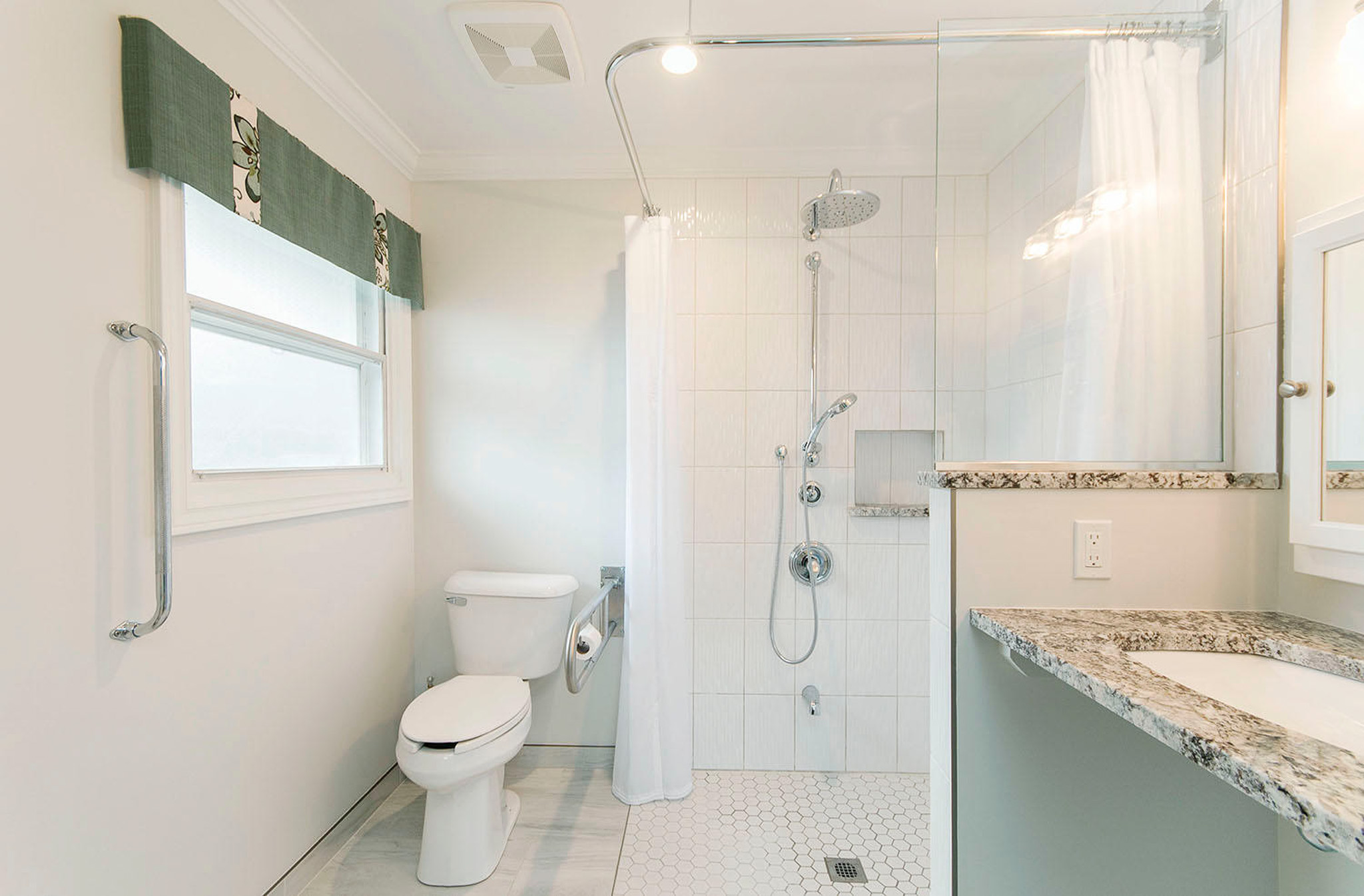
Why “accessible bathroom” searches are high-intent
Bathrooms concentrate risk in a small space. Water. Smooth surfaces. Tight turns. Fast movements. Low light in the middle of the night.
When a bathroom was not designed for aging, common frustrations show up fast:
- You have to twist to get past the door or vanity
- You cannot step in and out of the tub with confidence
- You worry about slipping when the floor is damp
- You do not know what to change first so you do not waste money
This is also why planning matters more than shopping. If you pick fixtures before you fix layout issues, you can end up rebuilding the same room twice.
What to do first for an accessible bathroom plan
Map the hardest moments, not the whole room
Start with the moments that feel difficult or unsafe. Most homeowners can name them in seconds.
Examples that often drive renovation decisions:
- Getting in and out of the shower or tub
- Standing on one leg to dry off
- Reaching for towels or toiletries
- Turning around near the toilet or vanity
- Getting up from the toilet on a bad day
These moments help you set priorities. You are not chasing perfection. You are reducing strain and risk where it actually happens.
Protect the wet zone first
If you only improve one part of the bathroom, focus on where water and movement overlap. That is usually the shower or tub area.
A strong plan starts by deciding what “safe entry” means for your household. Many aging-in-place plans lean toward a shower that is easy to step into. In some cases, a barrier-free or low-threshold shower is the right direction. In others, a tub with better access and support may still make sense.
What matters is the sequence. Decide the wet-zone setup before you finalize finishes, glass, or niche placement. It affects drain location, slope, waterproofing, and where controls should sit.
If you want a plain-language overview of accessibility goals in Canada, you can reference the Government of Canada’s Accessible Canada program page in your article body.
Confirm clear space and door approach
Accessibility is not only about what is inside the room. It is also about how you enter it.
A door that swings into a tight bathroom can block movement and create awkward turns. Some homeowners benefit from a different door swing or a space-saving door solution. The “right” choice depends on framing, plumbing walls, and what is on the other side of the doorway.
For larger renovations, Ontario’s Building Code includes barrier-free requirements for certain buildings and renovation situations. Even when a private home project is not held to the same standard as public buildings, those principles are still useful for planning clear space and safer layouts.

Aging in place home upgrades that belong in the bathroom
This is where homeowners often get stuck. There are so many options that it feels easier to do nothing.
A smarter approach is to choose upgrades that do two things:
help now, and still make sense later.
Shower and bath decisions that age well
This is usually the most important decision in an accessible bathroom plan.
Many aging-in-place households prefer a shower that avoids a high step-over. If you choose a shower, think about daily comfort, not only emergencies.
Helpful considerations include:
- Where you will stand while adjusting water
- Whether you need a stable place to pause
- How you will keep water contained without creating a trip point
- Whether controls are reachable without stretching
If you choose to keep a tub, planning is still key. A tub can be comfortable. It can also become the biggest barrier if access changes. Your plan should match your real use, not a “maybe someday” scenario.
Toilet area comfort and support
Toilet comfort is not glamorous, but it matters. It is also one of the easiest areas to make feel safer without changing the whole room.
What often helps is not one specific product. It is spacing and placement.
You want enough room to approach and stand up without twisting. You also want support where it feels natural to reach, not where it looks good on paper.
Vanity and storage you can actually reach
Accessible storage is one of the biggest quality-of-life upgrades.
When storage is too high, people overreach. When storage is too low, people bend. Both can be hard as mobility changes.
A good plan places daily items in the easiest reach zone. It also avoids deep cabinets that force you to lean in and rummage. Drawers, pull-outs, and open shelves can be both stylish and practical.
A great accessible bathroom is not filled with “special equipment.” It is a bathroom where the basic routine feels smooth.

How to keep an accessible bathroom from looking institutional
A lot of homeowners delay upgrades because they worry the bathroom will look medical. That fear is real.
The good news is that accessible design can look modern. It can also increase comfort for everyone in the house.
Design choices that feel modern
You can keep the space feeling like your home by focusing on finishes and shapes that are current.
Examples that tend to read as “designed,” not “clinical”:
- Warm lighting with even coverage
- Clean-lined hardware
- Thoughtful tile choices that add texture
- A cohesive palette instead of stark contrast everywhere
The biggest visual difference is usually not the safety features. It is whether the room looks intentional.
Subtle supports that blend in
Many supportive features now come in styles that blend in with the design. The key is choosing supports that match your fixtures and planning their placement early, not as an afterthought.
When supports are planned from the start, you can also reinforce walls correctly and avoid patchwork later.
Common planning mistakes that cause expensive do-overs
These are the pitfalls that turn a “simple bathroom refresh” into a costly redo.
- Starting with tile and vanity choices before deciding the shower plan
- Choosing fixtures without confirming where controls should be reached from
- Ignoring door swing and entry clearance until the end
- Adding storage that looks great but forces bending or reaching
- Underestimating how disruptive plumbing moves can be
Aging in place is not about making your bathroom “disabled-friendly.” It is about making it work across more seasons of life.
That is why planning comes first. It protects your budget and your peace of mind.
Ontario reality check: permits, code, and when to get help
If your project involves plumbing changes, electrical changes, ventilation changes, or structural changes, you may need permits or inspections. Rules vary by municipality, so it is smart to confirm early.
Ontario also publishes information on accessibility in the Building Code, including barrier-free washroom considerations for applicable situations.
Even if your renovation is a private residence project, code concepts can still guide good decisions, especially around clear space, safe approaches, and fixture planning.
If your goal is a bathroom that looks great and supports aging in place, you will often get the best result by treating it as a coordinated renovation, not a chain of small fixes.
Next steps with In-Trend
If you are planning an accessible bathroom and you want it to feel safe, modern, and easy to use, getting the plan right is the first win. A clear scope helps you prioritize what matters, avoid rework, and choose finishes that still feel like you.
In-Trend specializes in safe, stylish bathroom solutions designed for independent living. You can see their approach and options on their bathroom renovations page.
When you are ready to talk through your space and timeline, contact In-Trend Home Solutions to start a practical conversation about next steps.