
Laundry seems simple until it isn’t.
If your laundry room feels physically hard to use, you are not overreacting. Laundry includes bending, lifting, carrying, reaching, and standing on hard floors. Those demands add up fast when a home was not built with aging, mobility changes, or safety in mind.
Many Ontario homes also tuck laundry into basements, hallways, or tight closets. That can work for a while. Then a small injury, a new diagnosis, or simply time makes the same setup feel risky.
This article shares practical, real-world ways to make laundry safer and easier through accessible home design. You will see layout ideas, storage fixes, and appliance choices that can help the space work for more people without making it feel clinical.
Why laundry rooms become a problem over time
Laundry rooms often fail in the same ways:
- Tight clearances that force awkward turns
- Machines that require deep bending
- Storage placed “up high” because there is nowhere else
- Poor lighting that makes edges, cords, and wet spots harder to spot
- Floors that get slick when damp
If you are thinking, “This room used to be fine,” that is common. Universal design guidance from CMHC highlights that housing features like adjustable or reachable elements help spaces stay usable across ages and abilities, often without major redesign.
The goal is not to redesign your whole home overnight. The goal is to remove the friction points that make laundry feel unsafe, painful, or exhausting.
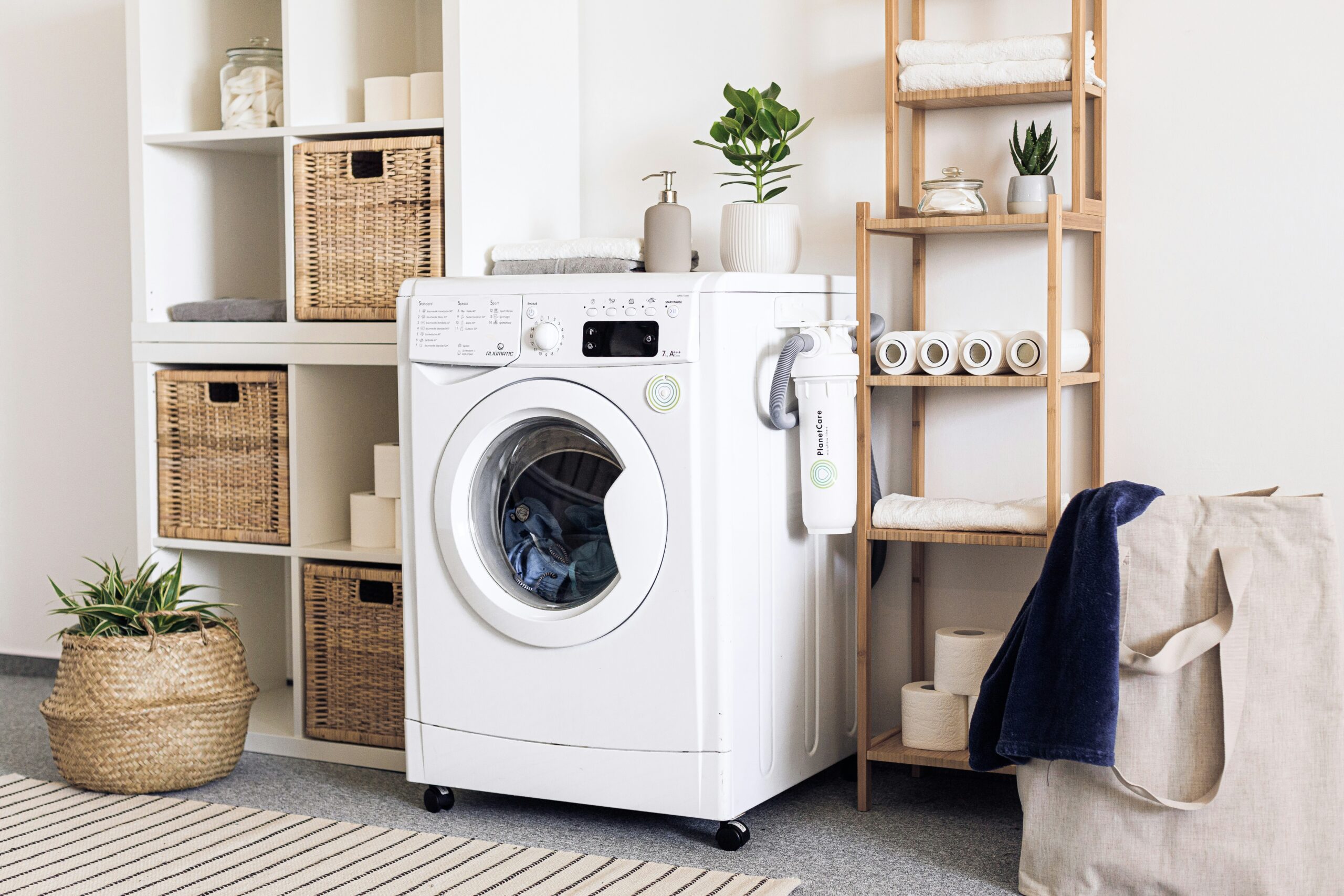
What “accessible home design” looks like in a laundry room
Accessible home design is about making the space usable with less strain and less risk. It is also about dignity. You should not have to “fight the room” to do a basic chore.
Clear space and easy movement
Start with movement. A laundry room works better when you can enter, turn, and step back from appliances without squeezing.
Helpful upgrades often include:
- Keeping a clear path from doorway to machines
- Planning for turning and passing space
- Avoiding clutter zones near the entry
If your laundry is part of a bigger remodel, this is where early planning pays off. In-Trend’s gallery includes projects where laundry was redesigned as part of accessibility-focused renovations, showing that laundry can be handled within a broader home plan.
Reach zones that reduce bending and strain
Two reach problems show up again and again:
- Bending to load or unload
- Reaching overhead for supplies
You can reduce both by planning “daily-use” items in the easiest zone to reach. Think detergent, stain remover, and baskets. These should not live above head height.
Coohom’s accessible laundry room design tips also call out user-friendly controls and storage within easy reach as practical ways to reduce strain.
Safer surfaces and lighting
Laundry rooms mix water, smooth flooring, and cords. Add low light and it becomes a fall-risk hotspot.
Safer design often means:
- Slip-resistant flooring or finishes
- Bright, even lighting that reduces shadows
- Clear contrast between floors, walls, and key edges
AODA guidance on accessible laundry rooms also points to the value of good colour contrast and practical drainage considerations in laundry areas.
Layout choices that make laundry easier
Layout is the difference between “I can manage” and “I dread this.”
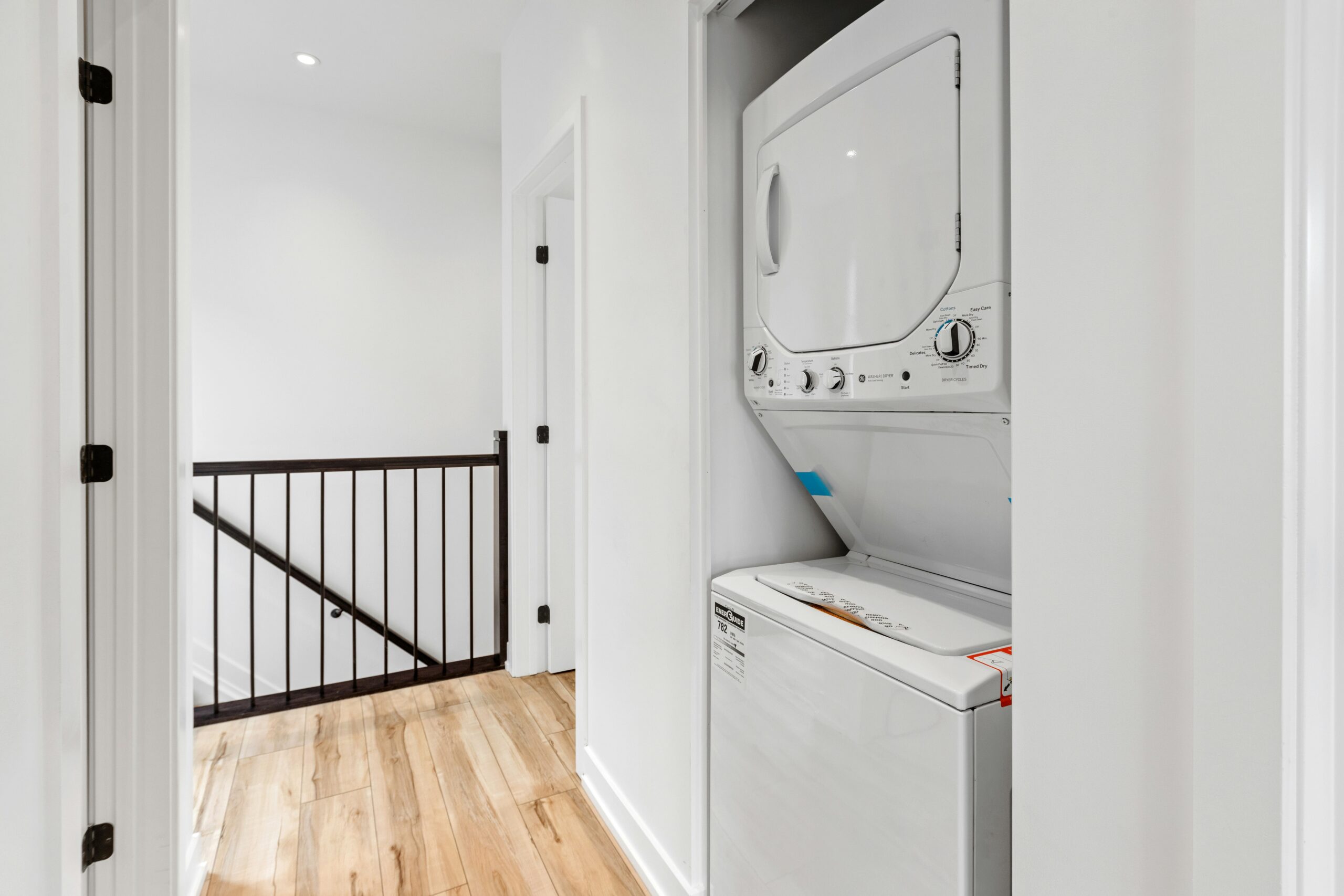
Side-by-side vs stacked appliances
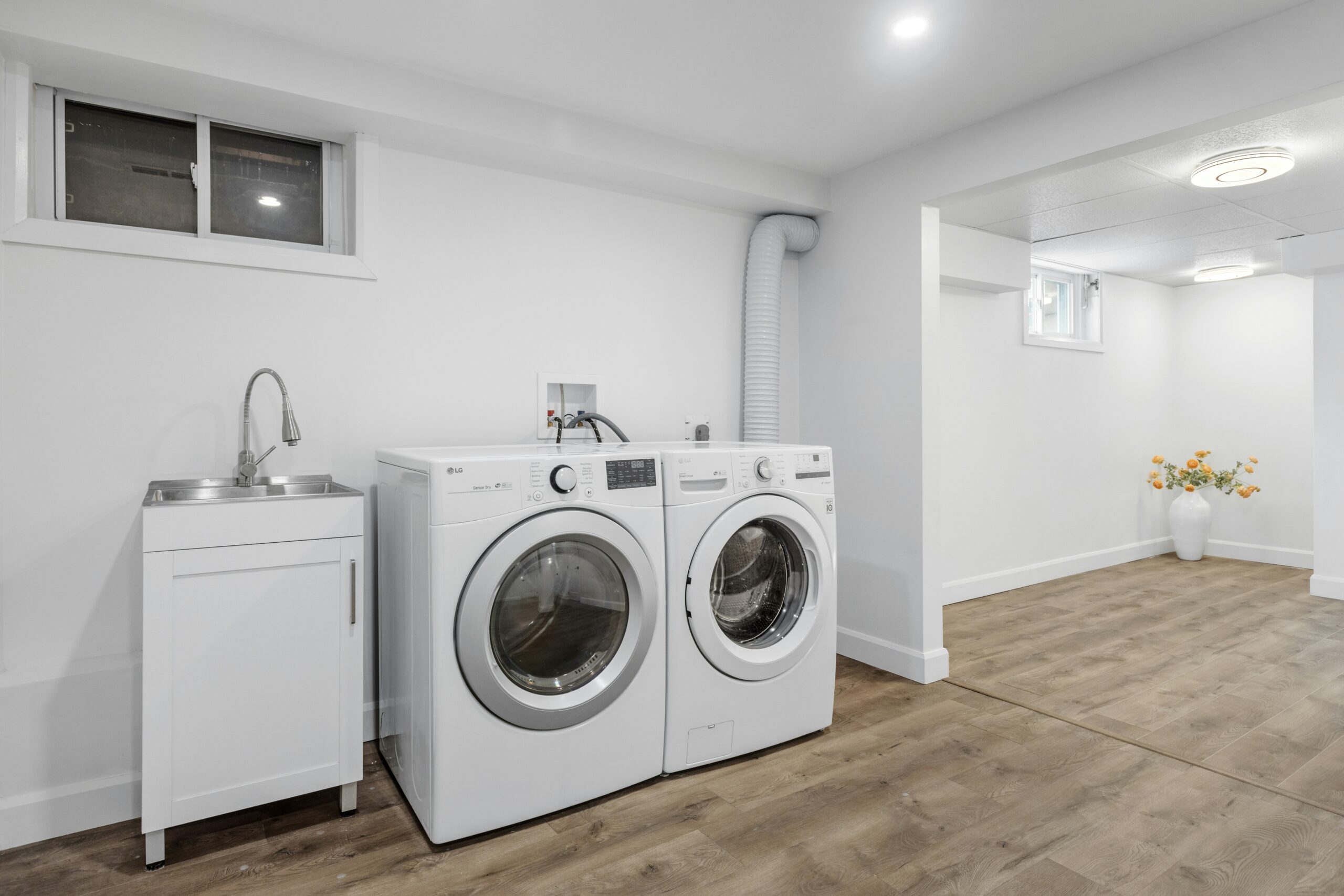
Side-by-side setups are often easier for many households because:
- Both doors are reachable without stretching overhead
- You can add a continuous counter for folding
- Controls are often easier to access
Stacked units can be a smart space-saver, but they can introduce reach issues. If stacking is necessary, consider how the top unit is loaded, where controls sit, and whether a safe step or alternative control setup is realistic for the people using it most.
If this is an aging-in-place upgrade, you can design for the “hardest day,” not the best day.
Door swings, thresholds, and traffic flow
Doors steal space. In small laundry rooms, a traditional swinging door can block movement and make the space feel tighter than it is.
Common solutions include:
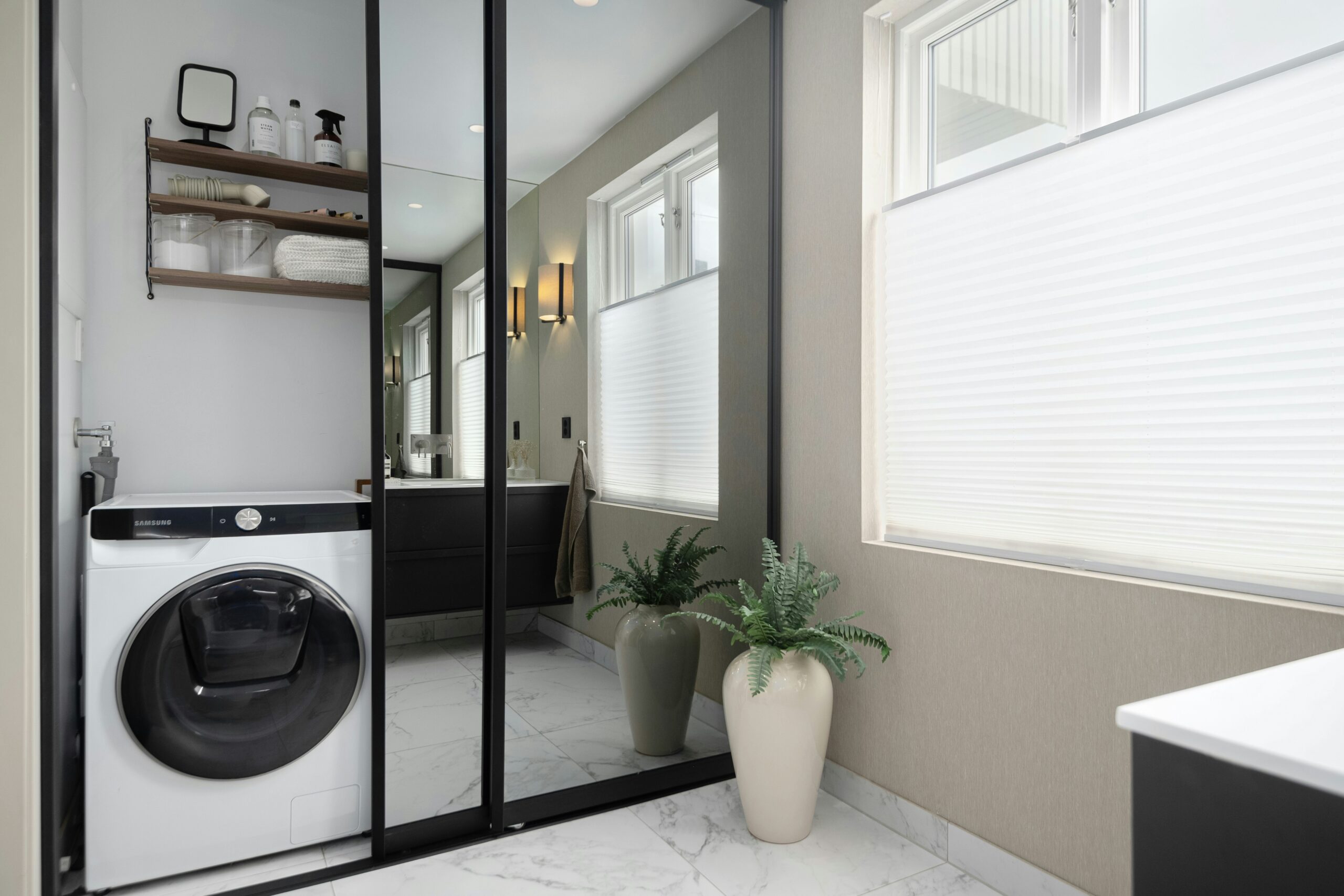
- Pocket doors or sliding doors where feasible
- Reversing a door swing to open out instead of in
- Removing unnecessary thresholds that trip feet or catch mobility aids
If your laundry is in a basement, think about the route to it too. Carrying a basket down narrow stairs is one of the most common “hidden hazards” in homes. If relocation is not realistic, focus on lighting, handrails, and basket strategy to reduce risk.
Storage that supports real life
A laundry room fails when storage is planned for looks instead of use.
Lower storage that still looks good
You can keep the room polished while making it easier to use:
- Pull-out drawers instead of deep base cabinets
- Open shelves at comfortable reach height for daily supplies
- Wall hooks or rails for lightweight tools like lint brushes
The key is keeping heavy items low enough to lift safely, without bending to the floor.
Coohom’s guidance also notes that keeping frequently used items within reach helps prevent overreaching or straining.
Sorting, folding, and a place to pause
The most useful laundry rooms include a “support surface.” That can be:
- A counter for folding
- A pull-out surface for sorting
- A small table at a comfortable height
If standing is hard, a seated option can change everything. A sturdy perch stool or a planned knee space under a counter can make folding and sorting more manageable.
Also consider where baskets land. If baskets end up on the floor, the room quietly forces extra bending all day long.
Appliances and controls that reduce effort
When people say laundry is physically hard, appliances are often the biggest culprit.
Features that tend to help:
- Front-loading machines that reduce deep bending
- Raised platforms (done correctly) to bring doors closer to waist height
- Large, clear controls that are easy to see and press
Government of Canada/CMHC material on accessible housing emphasizes planning clear floor space around appliances as a key design consideration, which matters in compact utility rooms.
If you want a quick, reader-friendly reference for appliance and safety considerations, this accessible laundry design article is a helpful companion resource: Accessible Laundry Room Design Tips.
One more detail people miss: sound and vibration. When machines shake, people brace their bodies. That can increase strain. Proper installation and leveling is not just “nice to have.”
When to call home renovation services for a laundry upgrade
Some laundry improvements are simple. Others involve electrical, plumbing, venting, structural changes, or permits.
You may want professional help if you are dealing with:
- Moving laundry to a different floor
- Adding or changing vents and dryer duct runs
- Reworking doorways or walls to improve clearance
- Adding new circuits, lighting, or outlets
- Water management, drains, or utility sink installs
In-Trend Home Solutions positions its work around renovations, general contracting, and accessibility services across the GTA and Southwestern Ontario. If your laundry upgrade is part of a wider home plan, it can make sense to treat it as one coordinated project instead of a string of separate fixes.
A practical planning approach for Ontario homes
You do not need a perfect plan. You need a plan that matches your body, your household, and your home.
A strong approach looks like this:
- Identify the two or three hardest moments in your current laundry routine
(Carrying baskets, bending, reaching, slipping, standing too long) - Decide whether this is a “comfort upgrade” or an “independence upgrade”
(Both are valid. The priority changes your choices.) - Confirm what must stay and what can move
(Machines, sink, storage, door location, venting) - Check whether permits or inspections may apply
Ontario’s building code accessibility info can be a starting point for understanding barrier-free concepts, especially when renovations are extensive.
If you are planning ahead for aging in place, you can also look at Canada’s newer accessible-ready housing standard summary, which specifically includes laundry rooms as a key area that should be accessible or easy to adapt.
That is the theme here: make today easier, and make tomorrow less disruptive.
Next steps with In-Trend Home Solutions
If your laundry room challenges are part of a larger accessibility or renovation goal, a guided consult can help bring everything together. Many homeowners begin with one difficult space, then realize similar layout and safety issues appear in hallways, bathrooms, entries, or stair areas.
In-Trend provides full general contracting and accessibility-focused renovation support, making it easier to plan improvements that work together instead of in isolation.
When you are ready to review options and timelines, contact In-Trend Home Solutions to start a clear, practical conversation about next steps for your home.