
If you’re adapting a bathroom for aging in place or everyday accessibility, focus first on transfers, reach, and maneuvering. The goal is a space that works seated or standing, independently or with support—and still looks like a modern home. In Canada, there’s solid guidance to help you get dimensions and details right.
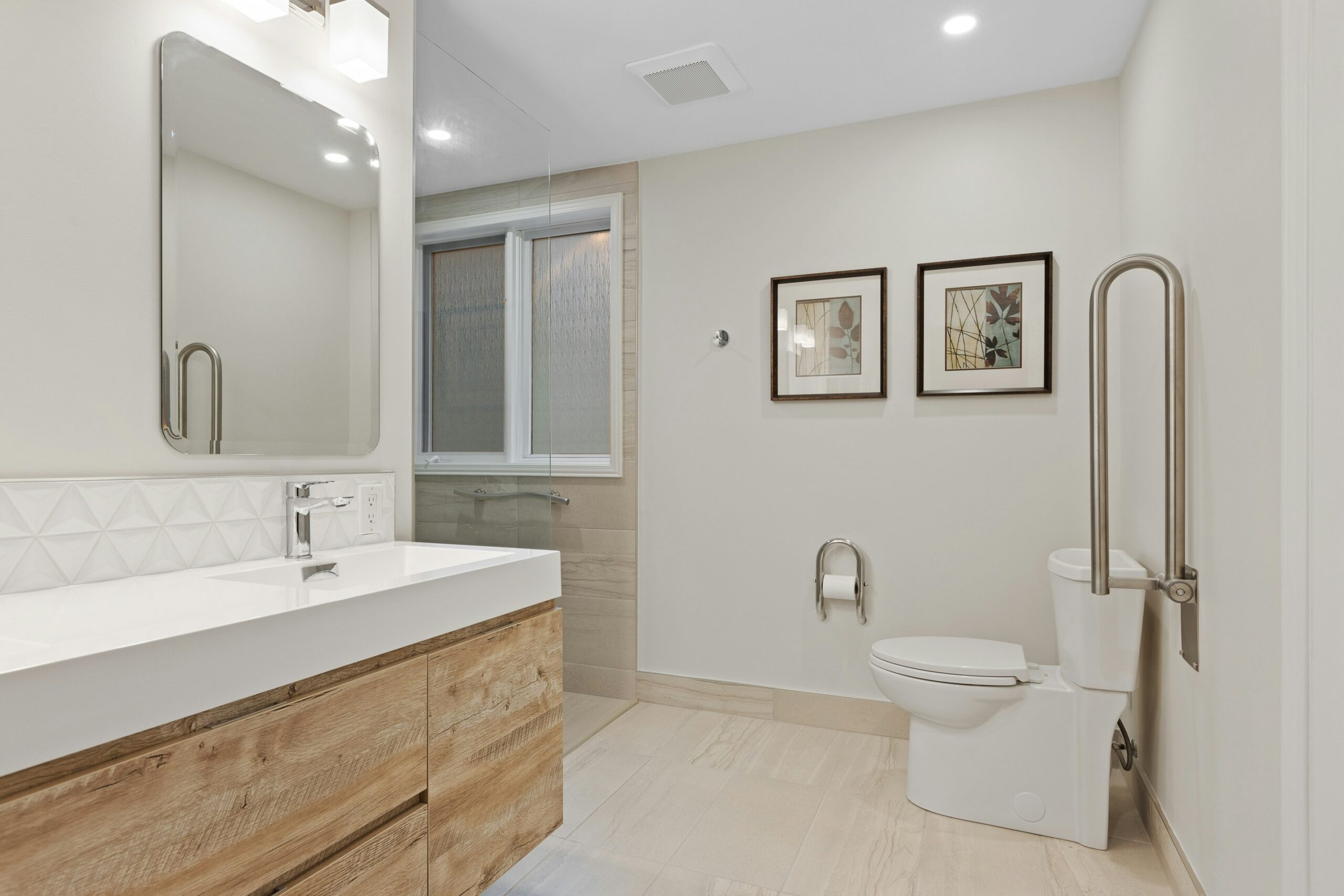
Why Accessible Bathroom Upgrades Matter in Canada
Accessibility isn’t just about comfort. It’s about dignity and safety at home. The Canadian Human Rights Commission reports that in 2021, only 38% of people with disabilities felt their homes were accessible to people with physical disabilities—a gap you can close with targeted upgrades. Canadian Human Rights Commission
This guide covers six high-impact changes—starting with a wheelchair accessible toilet and a roll-in shower—plus practical specs from Canadian sources you can bring to your contractor. For a tailored plan, see In-Trend’s Accessibility Services and Contact pages.
Upgrade 1 — Safer, Wheelchair Accessible Toilet
The toilet is where many transfers happen, so small details matter.
Seat height: Canadian dwelling guidance specifies a toilet seat height between 430 and 485 mm (approx. 17–19 in.) to support safer transfers from mobility devices.
Transfer space beside the toilet: Plan a clear zone so a mobility aid or caregiver can assist. Canadian standards show a 900 mm-wide transfer space next to the toilet with the toilet centerline 460–480 mm from the adjacent wall to balance reach and stability.
Flush controls: Choose a lever or push control you can use with a closed fist, and place it within 350 mm of the transfer side so it’s reachable without twisting.
Quick checklist
- 430–485 mm seat height.
- 900 mm side transfer space (min).
- Lever or push control within easy reach.
- Backing for grab bars on the transfer side and behind the fixture.
Upgrade 2 — Plan a Roll-In Shower
A well-designed roll-in shower removes the lip or curb, manages water with slope and drain placement, and adds solid support points.
No-lip threshold, slope, drain, and clear areas
To prevent tripping or wheel hang-ups, a threshold should be 0–13 mm high; if between 7–13 mm, it should be bevelled for a smooth entry. Inside the stall, provide a clear area of at least 900 × 1500 mm, with an unobstructed floor area of at least 900 mm deep and the width of the shower in front of the entrance for approach and transfers. The shower floor should be sloped 1–2% toward the drain; linear drains along a side or rear wall help keep water in the wet zone.
Why the slope matters: Too steep risks slips; too flat lets water migrate into dry areas. The 1–2% range is widely recommended for roll-in showers in accessible dwellings.
Grab bars, seating, and handheld shower
Add a vertical grab bar at the entry, plus horizontal and vertical bars (or an L-bar) at the seat wall. If you include a seat, set the top between 435 and 485 mm and ensure it’s strong, non-slip, and not spring-loaded. A handheld shower with a 1.8 m hose and mixing valve limited to 49 °C, adjustable roughly 860–2030 mm high, supports both seated and standing use. Controls should be reachable above the back-wall grab bar and no higher than 1100 mm.
Quick checklist
- 0–13 mm threshold (bevel if 7–13 mm).
- 900 × 1500 mm clear inside; matching clear area in front.
- Floor slope 1–2% to drain; consider linear drain.
- Entry vertical bar; seat-adjacent grab bars.
- Seat height 435–485 mm; handheld with 1.8 m hose; controls ≤1100 mm.
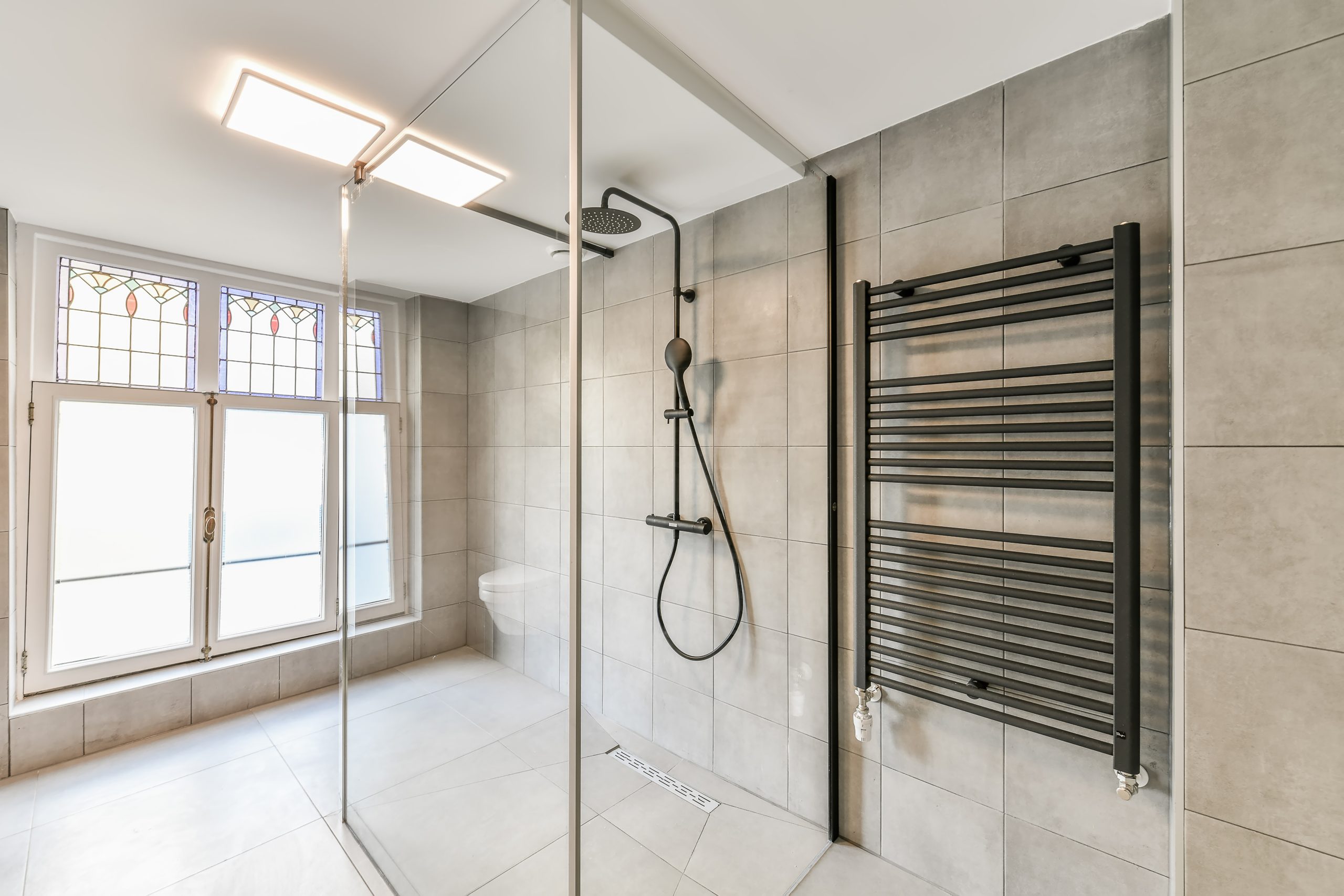
Upgrade 3 — Reinforced Walls and Reliable Grab Bars
Even if you won’t install grab bars on day one, add solid backing now so you can install them later without opening walls. Canadian housing guidance recommends reinforcing around the toilet, tub, and shower areas to accept grab bars, with thoughtful placements beside the toilet and within reach of seated positions.
What to reinforce
- Beside and behind the toilet (transfer side and back).
- Three walls around the shower or tub area to at least 1200 mm above the floor.
- Any other spot you expect to add support (near seats or entrances).
Upgrade 4 — Slip-Resistant Flooring and Low-Glare Finishes
Flooring should stay firm and grippy when wet. In the shower, combine slip-resistant surfaces with the 1–2% slope noted above to keep water moving to the drain. Outside the shower, avoid thick mats or loose rugs that catch wheels or can slide.
Choose matte or low-sheen finishes and add colour contrast at edges so you can easily distinguish the shower zone, threshold, and controls. This reduces missteps and helps with low vision—small changes that pay off daily. (These points align with Canadian accessibility guidance, which emphasizes lighting, contrast, and surface control for safety).
Upgrade 5 — Better Lighting, Controls, and Ventilation
Layer ambient, task, and night lighting. Keep switches reachable from seated positions and consider rockers, motion sensors, or voice control for hands-free use. Good ventilation limits humidity, which makes floors less slippery and hardware easier to grip.
In showers, controls and handheld heads should be reachable without stretching and mounted to avoid contact burns; Canadian guidance for accessible dwellings calls for temperature-limiting mixing valves and reachable placements.
Quick wins
- Night lights or toe-kick LEDs for safe paths.
- Large, labelled controls; avoid tiny knobs.
- Timed exhaust fan to reduce condensation.
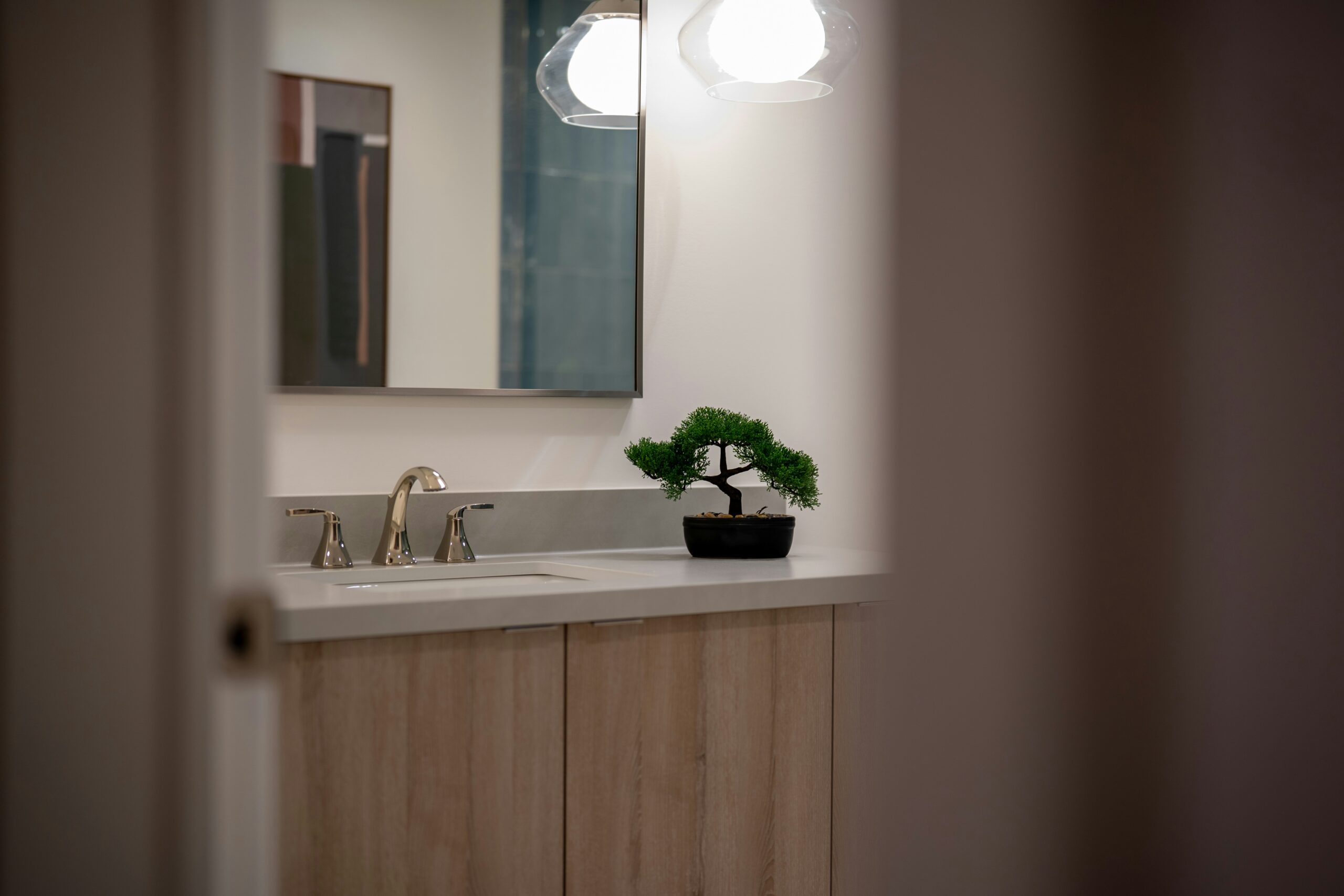
Upgrade 6 — Doors, Turning, and Everyday Reach
Make sure doors don’t fight you. Pocket or out-swing doors free up space and improve emergency access. Model Canadian standards for sanitary spaces call for wide, easy-operating doors and discourage in-swinging doors that block transfers in tight enclosures.
Provide clear floor areas at fixtures so you can approach straight-on or from the side. Canadian housing guidance suggests at least 760 × 1220 mm in front of or beside fixtures such as the sink, shower, and storage. Place shelves, hooks, and paper holders within easy reach from seated positions.
What It Costs, How to Start
Costs vary with layout, plumbing moves, and finish choices. Many households start with two high-value changes—toilet transfer improvements and a roll-in shower—then update floors, lighting, and doors. For a practical plan that matches your home and budget, book an in-home assessment:
- Learn how In-Trend designs to Canadian guidance for accessible dwellings.
- See options on our Accessibility Services page.
- Book your assessment for measurements, drawings, and a step-by-step quote.