What Is a Vertical Platform Lift? A Complete Homeowner Guide
October 6, 2026
Table of Contents
A vertical platform lift (VPL) is a powered device that raises and lowers a platform between two fixed points, allowing a wheelchair or scooter user to move between levels without a ramp or staircase. It’s sometimes called a porch lift or a wheelchair lift, and it works like a compact, self-contained elevator built for a single rise rather than a full multi-storey building.
How a VPL Works
The user rolls directly onto the platform, closes the gate, and presses a button to raise or lower it to the next level. Most residential units run on a hydraulic or screw-drive mechanism rather than cables, which keeps the moving parts enclosed and the ride smooth. A battery backup is standard on most models, so the lift still operates during a power outage.
Enclosed vs. Unenclosed Lifts
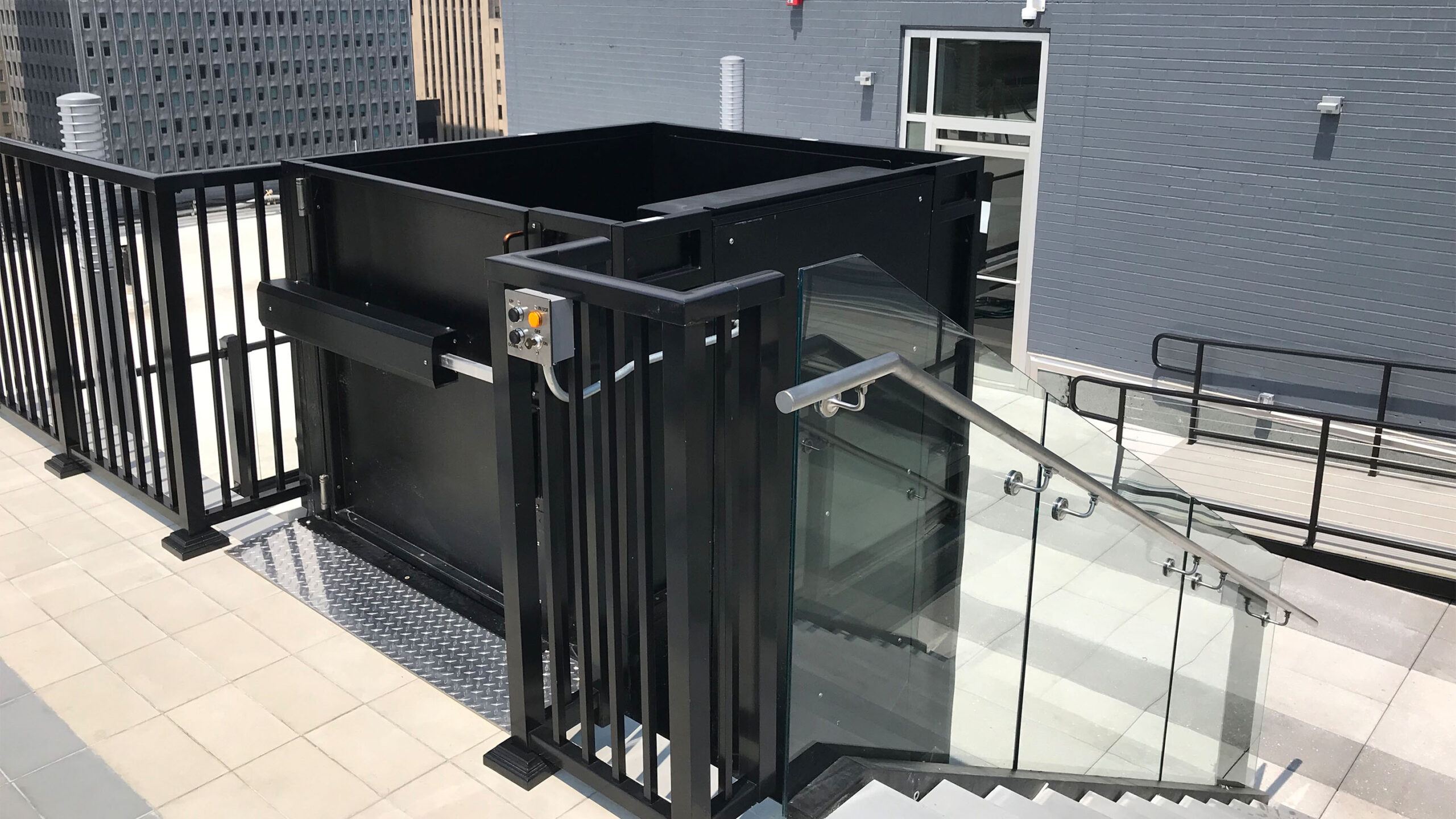
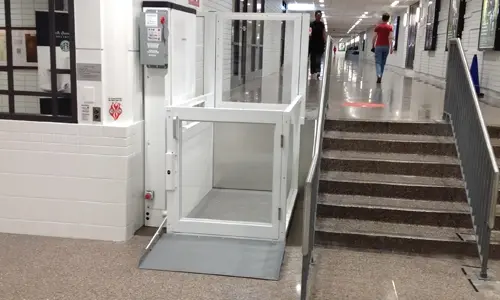
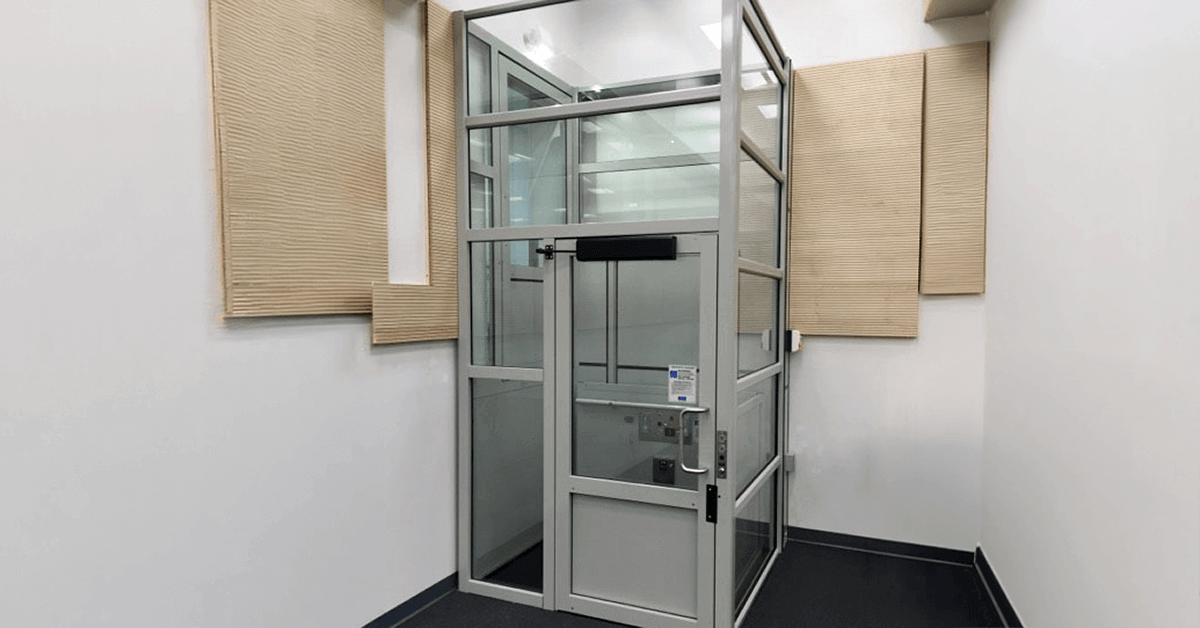
An enclosed VPL has solid walls and a roof around the platform, making it suitable for taller rises and full weather protection outdoors. An unenclosed lift has guardrails instead of walls and is typically used for shorter indoor rises, such as a single step down to a sunken living room or garage.
Typical Sizes and Specifications
Platform size: Most residential platforms measure around 36 x 48 inches, enough for a standard wheelchair with room to maneuver
Weight capacity: Typically 450 to 750 lbs, covering most power wheelchairs and scooters plus the user
Maximum rise: Most home installations handle up to about 14 feet, though very tall rises usually call for a different solution
Footprint: A compact unit needs roughly 5 feet by 5 feet of space, far less than an equivalent ramp
Where a VPL Makes Sense
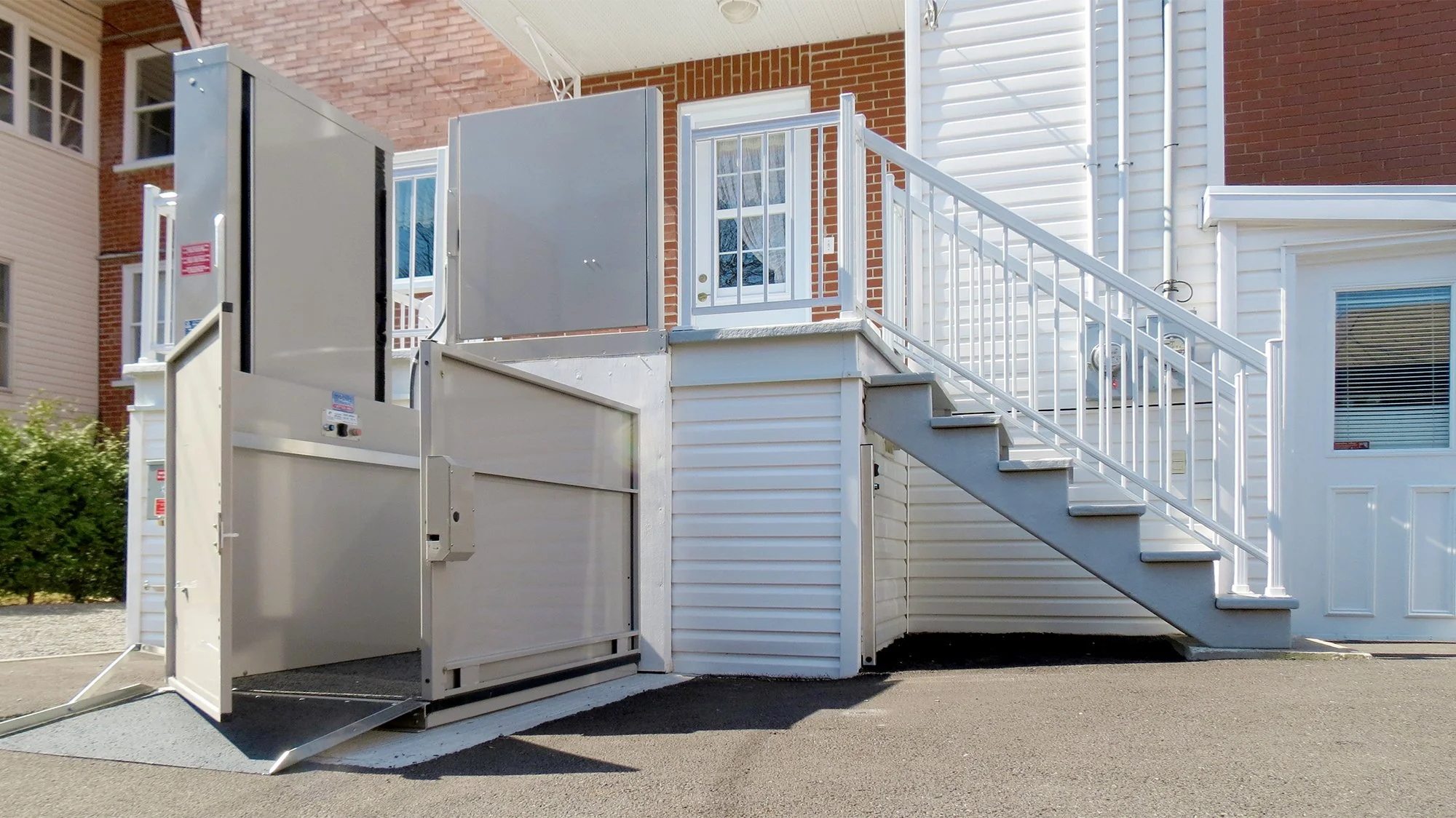
A VPL is often the better choice over a ramp when the vertical rise is too tall for a ramp to fit the available space, when there’s a raised porch or deck with no room for a long switchback ramp, or when a homeowner wants a solution that doesn’t dominate the front of the house the way a long ramp can. Indoors, they’re also used to connect split-level homes without requiring a full elevator installation.
Obstruction sensors that stop the lift if something blocks its path
An emergency stop button and manual lowering option in case of power loss
Weatherproofing and finish options that match the home’s exterior for outdoor units
Automatic or manual gates, depending on the model
Choosing a VPL Installer
Not every mobility equipment dealer installs both enclosed and unenclosed lifts, and outdoor installations in particular need to account for Ontario’s freeze-thaw cycles and snow load. Look for an installer who can walk through platform size, weight capacity, and rise requirements specific to the home, and who is familiar with CSA B355 compliance.
In-Trend Home Solutions installs VPLs, stair lifts, ceiling track lifts, and home elevators across London, Cambridge, and Etobicoke, working with occupational therapists and case managers to match the right lift to the home and the person using it. (See our elevators and lift device installation services)
The Bottom Line on Vertical Platform Lifts
A vertical platform lift solves the same problem as a ramp — moving between two levels — in a fraction of the space, which makes it a practical option wherever a long ramp isn’t feasible. Understanding platform size, weight capacity, and Canada’s CSA B355 safety standard is the starting point for figuring out whether one fits a specific home. (Talk to our team about a vertical platform lift for your home.)